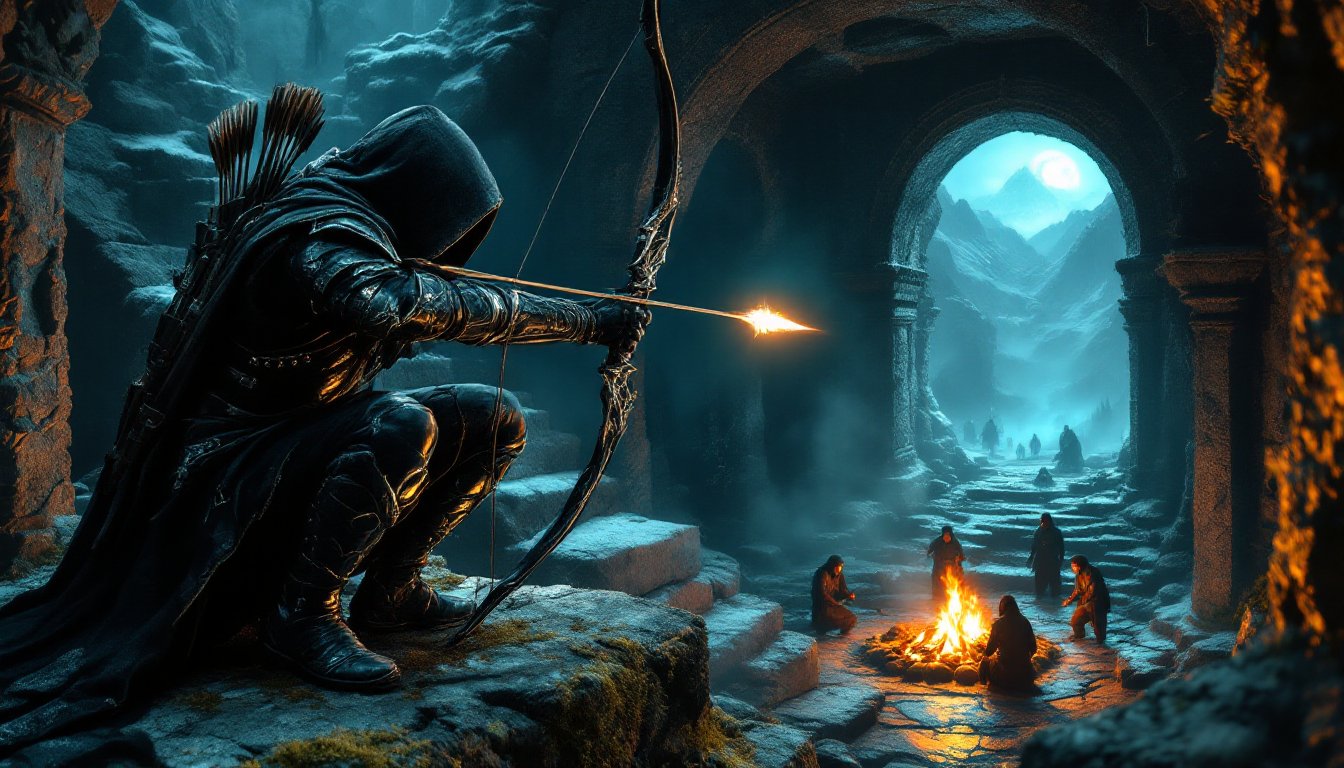
Few Thu’um in Skyrim deliver the visceral satisfaction of watching time crawl to a near-halt while you move at full speed. The Slow Time shout, known in dragon tongue as Tiid-Klo-Ul, isn’t just a flashy ability: it’s a tactical nuke that turns overwhelming odds into child’s play. Whether you’re facing down a dragon priest, a roomful of Draugr, or that one Forsworn who won’t stop pelting you with arrows, Slow Time gives you the breathing room to reposition, land critical hits, or simply survive encounters that would otherwise end in a reload.
But here’s the catch: this shout doesn’t just fall into your lap. Each Word of Power is tucked away in dangerous dungeons, guarded by enemies who’d love nothing more than to add your bones to their collection. And even after you’ve collected all three words, knowing when and how to use Slow Time separates the Dragonborn who merely survives from the one who dominates. This guide covers everything, exact skyrim slow time shout locations, combat strategies for every playstyle, synergistic builds, and the advanced tricks that turn Slow Time from a panic button into a core part of your arsenal.
Table of Contents
ToggleKey Takeaways
- The Slow Time shout (Tiid-Klo-Ul) is a tactical ability that slows enemies to 10-30% speed while you move at 70-80% normal capacity, creating massive combat advantages across all playstyles.
- All three Words of Power for Slow Time can be found in dangerous dungeons: Tiid in Hag’s End, Klo in Korvanjund, and Ul in Labyrinthian, requiring three dragon souls to fully unlock.
- Slow Time synergizes powerfully with sneak attacks, power attacks, archery, and magic—enabling one-shot eliminations, rapid multi-arrow shots, and uninterrupted spell casting during the 16-second effect.
- The Amulet of Talos is essential equipment, reducing the 45-second cooldown to 36 seconds, while perks like Assassin’s Blade, Impact, and Quick Shot create broken combat combinations.
- Avoid using Slow Time in water, during scripted sequences, or when ranged enemies already have arrows in flight, as these situations nullify the shout’s tactical advantages.
What Is the Slow Time Shout in Skyrim?
Slow Time (Tiid-Klo-Ul) is one of the twenty Shouts available to the Dragonborn, and it does exactly what the name promises: it warps the flow of time itself, slowing everything around you to a fraction of normal speed while you continue to move and act at near-full capacity. Enemies crawl through their attack animations, arrows drift lazily through the air, and even dragon breath takes an eternity to reach you.
Unlike damage-dealing shouts such as Unrelenting Force or Fire Breath, Slow Time is purely tactical. It doesn’t kill enemies directly, but it creates windows of opportunity that wouldn’t otherwise exist. Think of it as a reality hack that turns a three-on-one ambush into a series of one-on-one duels where you dictate every exchange.
How the Slow Time Shout Works
When you activate Slow Time, the game world enters a slowed state for a fixed duration. Your movement speed, attack speed, and spell-casting aren’t completely immune to the effect, you’re slowed slightly as well, but the difference is dramatic enough that you feel like a speedster in a room full of statues.
The shout operates on a simple mechanic: time dilation. Enemies move at roughly 30% speed with one word, 15% with two, and just 10% with all three words unlocked. Meanwhile, you operate at about 70-80% of your normal speed, creating a massive tactical advantage. The effect applies to everything in the environment, including physics objects, trap triggers, and even some scripted sequences.
One crucial detail: Slow Time doesn’t pause stamina or magicka regeneration. Both yours and your enemies’ resource pools continue to tick at normal speed relative to real time, not in-game time. This means you can regenerate significant resources during a single shout activation if you disengage briefly.
All Three Words of Power Explained
Each Word of Power extends the duration of the effect:
- Tiid (Time) – First word, slows time for 8 seconds
- Klo (Sand) – Second word, extends duration to 12 seconds
- Ul (Eternity) – Third word, maxes out at 16 seconds
The progression is linear and straightforward. Unlike shouts such as Elemental Fury where each word adds new functionality, Slow Time simply gets better at doing one thing: giving you more time. Sixteen seconds might not sound like much on paper, but in the heat of combat with everything moving at 10% speed, it’s an eternity. You can circle behind a giant, land a full power attack combo, drink a potion, and reposition before he’s even completed his club swing.
The shout has a 45-second cooldown at full strength (all three words), which is middle-of-the-pack compared to other Thu’um. The cooldown begins the moment you activate the shout, not when the effect ends, so your effective downtime is only about 30 seconds.
Where to Find Every Slow Time Word of Power
All three Words of Power for Slow Time are scattered across Skyrim’s most dangerous dungeons. None are handed out as quest rewards, so you’ll need to venture into hostile territory specifically to claim them. Here are the exact skyrim slow time shout locations.
Tiid – Hag’s End Location Guide
Tiid is located in Hag’s End, a Forsworn-infested ruin perched high in the mountains west of Solitude, in the Reach. This is arguably the most annoying Word of Power to collect because Hag’s End sits at the end of a long, winding dungeon crawl.
To reach it:
- Travel to Deepwood Redoubt, a Forsworn camp southwest of Solitude (directly west of Dragon Bridge).
- Fight through Deepwood Redoubt’s exterior camps and enter the interior cave system.
- Progress through Deepwood Vale, an outdoor transition area still crawling with Forsworn.
- Enter Hag’s End proper and ascend the tower.
- At the top, you’ll face a Hagraven named Petra (she’s tied to the “Kyne’s Sacred Trials” quest if you’re doing that). The Word Wall is behind her.
This is a gauntlet. Expect heavy Forsworn resistance, including Briarhearts at higher levels. Stock up on healing potions and consider bringing a follower to share aggro. The Word Wall is impossible to miss once you reach the tower’s summit, it’s sitting right there in the open, overlooking the Reach.
Klo – Korvanjund Location Guide
Klo can be found in Korvanjund, a Nord ruin east of Whiterun. This is one of the few Words of Power that players following the main Civil War questline will encounter organically, as Korvanjund features prominently in the quest “The Jagged Crown.”
Location details:
- Korvanjund is northeast of Whiterun, sitting in the snowy foothills below Windhelm.
- If you’re doing the Civil War quests (either Imperial or Stormcloak side), you’ll be directed here to retrieve the Jagged Crown.
- The Word Wall is in Korvanjund Crypt, the deepest section of the dungeon, right before you claim the crown.
If you’re not doing the Civil War storyline, you can still visit Korvanjund independently. The dungeon is filled with Draugr of varying levels, including a Draugr Overlord or Death Overlord guarding the final chamber depending on your level. The Word Wall is impossible to miss, it’s directly adjacent to the throne where the Jagged Crown sits.
Pro tip: If you complete the Civil War quest here, you’ll automatically learn the word when you pass by the wall. No need to activate it manually.
Ul – Labyrinthian Location Guide
Ul, the final word, is locked behind one of Skyrim’s most iconic and challenging dungeons: Labyrinthian. This massive Nordic ruin southeast of Morthal is the climax location for the College of Winterhold questline.
How to get it:
- Progress through the College of Winterhold questline until you reach the quest “The Staff of Magnus.”
- You’ll be given the Torc of Labyrinthian, which is required to unlock the dungeon’s inner areas.
- Travel to Labyrinthian (it’s in the mountains between Morthal and Dawnstar, slightly southeast of Morthal).
- Fight through the exterior ruins, then use the Torc to enter Labyrinthian (interior).
- Navigate the sprawling dungeon, expect high-level Draugr, frost trolls, and spectral enemies.
- The Word Wall is in Shalidor’s Maze, near the final confrontation with Morokei, the dragon priest.
Labyrinthian is no joke. It’s a long dungeon with multiple loading zones, tough enemies, and environmental hazards. Many players pursuing advanced dragon priest strategies consider Morokei one of the trickier priests due to his powerful destruction spells and the magical anomalies that support him. Come prepared with frost resistance, strong healing, and plenty of soul gems if you rely on enchanted weapons.
The Word Wall sits in plain sight in the ritual chamber just before you face Morokei. You can’t miss it.
How to Unlock and Use Slow Time Effectively
Finding the Words of Power is only half the battle. To actually use them, you need to spend dragon souls, and understanding the shout’s mechanics ensures you get the most out of every activation.
Absorbing Dragon Souls to Unlock Words
After you discover a Word of Power at a Word Wall, it appears in your Magic menu under Shouts, but it’s grayed out and unusable. To unlock it, open the Magic menu, navigate to the Shouts tab, highlight the word, and press the unlock button (default: R on PC, X on Xbox, Square on PlayStation). Each word costs one dragon soul.
This means you need three dragon souls total to fully unlock Slow Time. Early in the game, dragon souls might feel scarce, but as you progress through the main quest and start encountering random dragon spawns, you’ll accumulate more than you need. Prioritize unlocking all three words of Slow Time as soon as possible, the jump from 8 seconds to 16 is massive.
Dragon soul farming tip: Dragons respawn at their lairs (marked dragon head icons on the map) after a certain period of in-game time. If you’re desperate for souls, fast-travel between known dragon lairs and check for respawns.
Cooldown Times and Shout Duration
The full three-word Slow Time shout has a 45-second cooldown. With the Amulet of Talos (which reduces shout cooldown by 20%), this drops to 36 seconds. If you stack the Blessing of Talos (another 20% reduction from praying at a Talos shrine), you can theoretically get it down to around 28 seconds, though the blessing is easily lost and not always practical to maintain.
Duration breakdown:
- 1 word (Tiid): 8 seconds of slow time, 30-second cooldown
- 2 words (Tiid Klo): 12 seconds, 40-second cooldown
- 3 words (Tiid Klo Ul): 16 seconds, 45-second cooldown
The longer the shout, the longer the cooldown, but the value proposition is clear. Sixteen seconds of battlefield control is worth the extra five-second wait.
One often-overlooked detail: you can swap shouts mid-cooldown. If you use Slow Time and then switch to Unrelenting Force, your active cooldown doesn’t transfer. This means you can use Slow Time, switch to another shout, use that, and switch back to check if Slow Time is ready again. Veteran players exploit this by rotating between two or three shouts in prolonged fights.
Best Combat Strategies Using Slow Time
Slow Time is build-agnostic, it’s useful for everyone, but each playstyle leverages it differently. Here’s how to maximize the shout for melee, ranged, and magic builds.
Melee Combat Tactics with Slow Time
For warriors, rogues, and anyone who fights up close, Slow Time transforms dangerous engagements into execution chambers. Enemies move so slowly that dodging becomes trivial, and you can land multiple power attacks before they finish a single swing.
Key tactics:
- Positioning: Activate Slow Time, then circle-strafe to your enemy’s back. Backstabs and sneak attack multipliers still apply if you re-enter sneak mid-shout.
- Power attack chains: Normally, power attacks leave you vulnerable. With Slow Time active, you can chain multiple heavy hits without fear of interruption.
- Shield bashing and stagger-locking: Bash an enemy to stagger them, follow with a power attack, bash again. In slowed time, enemies can’t recover fast enough to block or counter.
- Fighting multiple enemies: Slow Time lets you isolate targets. Dash between enemies, landing hits on one before the others can react, effectively turning a group fight into a series of 1v1s.
Dual-wield and two-handed builds benefit the most. Dual power attacks deal massive burst damage, and two-handed weapons already stagger on hit, combine that with Slow Time, and you can stunlock dragon priests into oblivion.
Archery and Ranged Attack Combinations
Archers get absurd value from Slow Time. Enemies move in slow motion, but your arrows fly at nearly full speed (they’re slightly affected, but not nearly as much as enemy movement). This makes headshots trivial and lets you pump out a ridiculous number of arrows in a short window.
Effective strategies:
- Precision aiming: Line up perfect headshots on moving targets. Even serpentine-strafing mages become easy pickings.
- Multi-target burst: Tag every enemy in a group with a single arrow before they can close distance. Combined with the Quick Shot perk (faster draw speed), you can fire off 8-10 arrows during a 16-second Slow Time window.
- Escape and reposition: Activate Slow Time, sprint to high ground or behind cover, then resume firing from safety.
- Exploit paralysis and stagger: Perks like Bullseye (paralyze chance on power shots) and Impact (stagger on dual-cast destruction spells) become even more oppressive when enemies can barely move.
Some players report that modding communities on platforms like Nexus Mods have created balance tweaks to archery and Slow Time interactions, but the vanilla version is already incredibly powerful.
Magic User Strategies and Spell Combos
Mages have a more nuanced relationship with Slow Time. Spells are affected by the time dilation, meaning your firebolt crawls just as slowly as enemy arrows. But, the utility still shines.
How mages benefit:
- Casting time advantage: Charge and release master-level spells like Lightning Storm or Blizzard without interruption. Enemies are too slow to reach you or land hits to stagger your casting.
- Layering AoE spells: Drop multiple rune spells in a confined space, then kite enemies into them. In slow time, you can set an entire hallway on fire before the first Draugr reaches you.
- Summoning and support magic: Cast Conjure Dremora Lord, Conjure Storm Atronach, or high-level summons without enemies pressuring you. Your summons also move at full speed relative to the slowed enemies, giving them a massive advantage.
- Healing and buffing: Pop Slow Time, cast Close Wounds or Grand Healing, reapply armor spells (Ebonyflesh, Dragonhide), and refresh summons. By the time the effect ends, you’re back at full strength.
Dual-casting with Impact deserves special mention: stagger an enemy with your first spell, then spam more spells while they’re frozen in the stagger animation. In slowed time, they literally can’t recover.
For players interested in deeper spell mechanics and synergies, resources like IGN’s comprehensive Skyrim guides offer breakdowns of spell damage scaling and optimal rotations.
Optimal Character Builds for Slow Time
While Slow Time works with any build, certain perk trees and equipment setups create genuinely broken synergies.
Perks and Skills That Synergize with Slow Time
Here are the perks that make Slow Time go from “strong” to “game-breaking”:
Sneak tree:
- Assassin’s Blade (15x sneak attack damage with daggers): Activate Slow Time, sneak behind a target, one-shot them, move to the next. Repeat.
- Deadly Aim (3x sneak attack damage with bows): Combined with Slow Time, you can land multiple sneak shots before enemies detect you.
One-Handed / Two-Handed:
- Critical Charge (sprint power attack does critical damage): Slow Time + sprint power attack turns you into a freight train. Enemies can’t react in time.
- Savage Strike / Devastating Blow (standing power attacks have a chance to decapitate/knockdown): More power attacks = more procs.
Archery:
- Quick Shot (faster draw speed): Fire more arrows during Slow Time.
- Ranger (moving while drawing doesn’t slow you): Stay mobile, stay shooting.
- Steady Hand (zoomed aiming slows time even more): Stack this with Slow Time for ultra-precise shots.
Destruction:
- Impact (dual-casting staggers targets): Enemies stuck in stagger loops can’t retaliate.
- Augmented Flames/Frost/Shock (damage boosts): More damage per spell makes your limited casting time more efficient.
Alteration:
- Atronach (30% spell absorption): Combined with the Atronach Stone, you can hit 80% absorption, making you nearly immune to magic while you pummel slowed mages.
Equipment and Enchantments to Maximize Effectiveness
Amulet of Talos is non-negotiable. The 20% shout cooldown reduction drops Slow Time from 45 seconds to 36, allowing you to use it far more liberally. If you’re on PC and okay with console commands, you can stack multiple Fortify Shout effects, but that’s venturing into exploit territory.
Fortify One-Handed / Two-Handed / Archery enchantments are obvious picks. The more damage you deal during those 16 seconds, the better.
Fortify Stamina / Magicka Regeneration enchantments help you recover resources faster during Slow Time, since regeneration operates on real-time, not slowed time.
Resist Magic and Elemental Resistance enchantments keep you alive when you’re pushing aggressively into enemy lines.
Specific gear recommendations:
- Nightingale Bow (unique bow with absorb health/stamina): Fantastic for archery Slow Time builds.
- Daedric Armor (highest physical defense): For melee builds tanking in slowed time.
- Archmage’s Robes (all spells cost less, magicka regen): Perfect for mages using Slow Time to spam spells.
- Ebony Blade (two-handed sword that absorbs health and ignores armor): Health drain keeps you topped off during extended slow-mo combat.
One advanced trick: enchant a full set of gear with Fortify Shout enchantments. At maximum enchanting skill with potions and perks, you can stack enough reduction to make Slow Time available almost constantly. It’s borderline cheating, but it’s possible within the game’s systems.
Common Mistakes and Limitations to Avoid
Slow Time is powerful, but it’s not a win button in every situation. Here’s where players tend to screw up.
When Not to Use Slow Time
Against ranged enemies in open spaces: If you activate Slow Time while a dozen archers have already loosed arrows at you, those arrows are now in flight and still going to hit you. Slow Time doesn’t stop projectiles mid-air or make them miss: it just slows them down. In wide-open areas with no cover, you might eat a faceful of arrows anyway.
During scripted sequences: Some story events and dialogue sequences don’t play nice with Slow Time. Activating it during certain cutscenes or triggered events can cause visual glitches or softlock the game. If an NPC is mid-speech or a quest trigger is firing, hold off.
When allies are doing the heavy lifting: Slow Time affects everyone, including your followers, summons, and any NPCs fighting alongside you. If you’ve got a beefy follower tanking while you deal damage, slowing them down might actually hurt your DPS.
In water: Movement speed in water is already drastically reduced. Slow Time makes it worse. You become a sitting duck if you activate it while swimming.
Bugs and Glitches with Slow Time
Vanilla Skyrim (pre-patch and even in the Special Edition) has a handful of known issues with Slow Time:
Permanent Slow Time glitch: Occasionally, the game fails to reset the time dilation effect when the shout ends, leaving everything moving in slow motion until you reload a save. This is most common when you use Slow Time right before a loading screen or fast-travel.
Companion AI breaks: Followers sometimes get stuck in the slowed state even after the effect ends, moving at a crawl until you dismiss and rehire them.
Physics objects go haywire: Items on tables, corpses, and ragdolls can bug out when Slow Time ends, launching into the stratosphere or vibrating violently. It’s hilarious, but it can also cause crashes on older hardware.
Sound desync: Audio effects sometimes don’t properly adjust to the slowed timescale, leading to echoing voices or delayed sound effects.
Most of these are fixed by the Unofficial Skyrim Patch, available on all platforms including through community-maintained mod repositories. If you’re playing unmodded, save frequently and avoid using Slow Time near quest triggers or transitions.
Advanced Tips and Tricks for Slow Time Mastery
Once you’ve mastered the basics, these advanced tactics will push Slow Time into genuinely broken territory.
Shout rotation micro: As mentioned earlier, shout cooldowns don’t transfer between different shouts. Veteran players rotate between Slow Time, Unrelenting Force, and Elemental Fury (if not using enchanted weapons) to maintain constant pressure. The rhythm is: Slow Time → attack → switch to Unrelenting Force → use it → switch back to check Slow Time cooldown → repeat. It’s micro-intensive, but devastating.
Animation canceling with Slow Time: When you power attack, you’re locked into an animation. Activate Slow Time mid-swing, and your animation plays out at near-full speed while enemies are frozen. This effectively cancels the vulnerability window of heavy attacks.
Environmental kills: Slow Time gives you plenty of room to manipulate the environment. Shoot oil pools, trigger hanging braziers, shove enemies off cliffs, everything is easier when they’re moving at 10% speed.
Vampire Lord and Werewolf synergy: Both transformations benefit massively from Slow Time. Werewolf power attacks hit like trucks, and Vampire Lord’s drain life spell becomes a death beam when enemies can’t escape or retaliate.
Combining with potions and scrolls: Pop a Fortify Destruction potion or Fortify One-Handed potion right before Slow Time, then go to town. The buff lasts the full real-time duration, so you get maximum value during the slowed window.
Pickpocketing exploit: Activate Slow Time, then attempt to pickpocket an NPC. Even if they detect you, they turn toward you so slowly that you can empty their pockets, walk away, and be out of aggro range before they finish their “Hey, what are you doing?” animation. This is borderline exploit territory, but it’s not technically a glitch.
Boss fight dominance: Slow Time trivializes most boss encounters. Dragon priests, Miraak, Harkon, all of them become manageable when you dictate the pace. The key is to always have a dragon soul banked to unlock the full shout as soon as you acquire the third word.
For players diving deeper into the narrative and lore behind the Thu’um and its place in Nordic culture, exploring Skyrim’s deeper mythological frameworks can add context to why shouts like Slow Time are so world-breaking within the setting.
Speedrunning applications: Slow Time is used in several speedrun categories to manipulate NPC pathing and skip waiting for certain animations. If you’re into optimizing clear times or challenge runs, Slow Time is part of the core toolkit.
Legendary difficulty viability: On Legendary, where enemies deal triple damage and have quadruple health, Slow Time is one of the few mechanics that lets you survive without cheesing. The ability to avoid damage entirely while still dealing it makes it arguably the best shout for high-difficulty playthroughs.
Conclusion
Slow Time isn’t just another entry on the shout list, it’s a fundamental shift in how you approach combat in Skyrim. Whether you’re a sword-swinging nord, a sneaky archer, or a spell-slinging mage, those 16 seconds of warped reality give you control over fights that would otherwise steamroll you. From the treacherous climb to Hag’s End to the dragon priest gauntlet in Labyrinthian, collecting all three words is a rite of passage for any serious Dragonborn.
But the real mastery comes in knowing when to use it, how to build around it, and what tricks turn it from a strong tool into an outright cheat code. Stack the right perks, equip the Amulet of Talos, and practice your shout rotations, and you’ll find yourself wondering how you ever played without it. The Greybeards might preach restraint, but when you’re staring down a dragon, a giant, and three bandits all at once, restraint goes out the window. Time to slow things down.