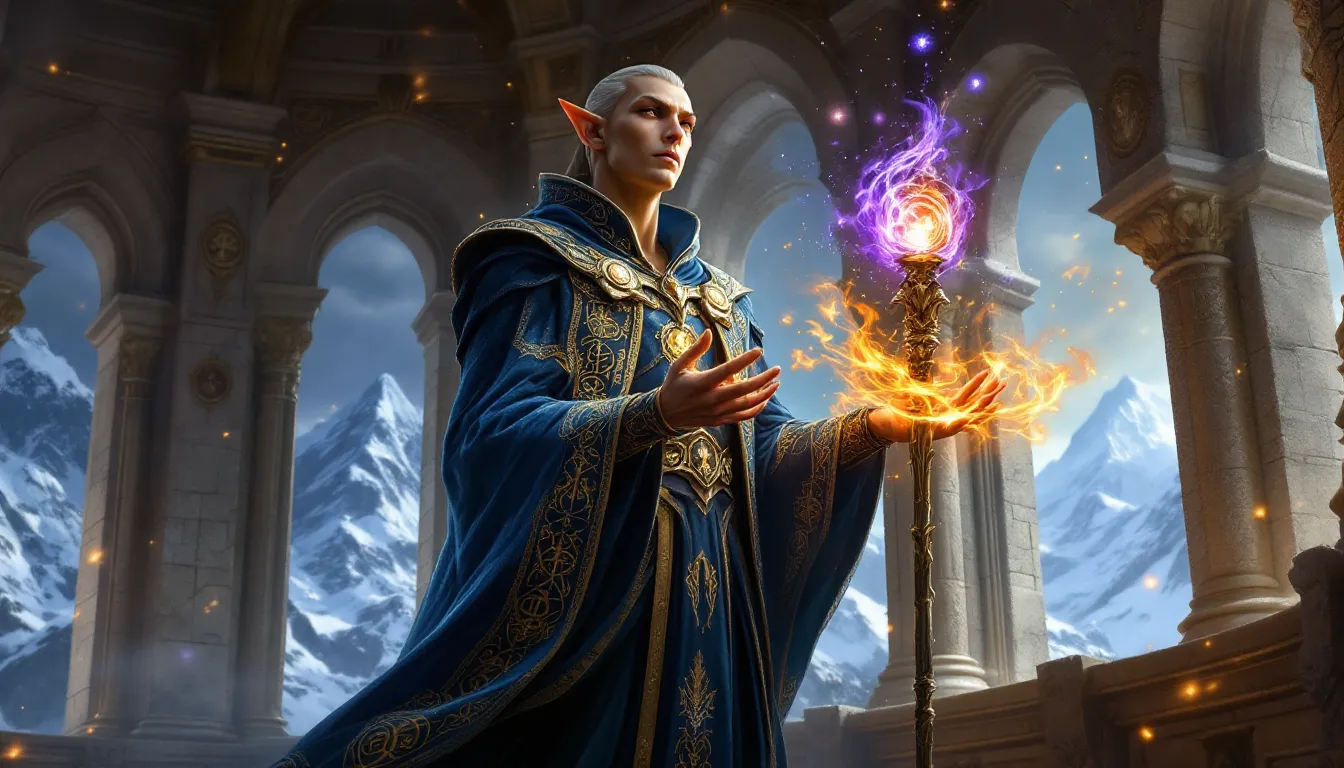
The Altmer, better known as High Elves, stand tall in Skyrim, both literally and figuratively. With their golden skin, superior magical aptitude, and complicated political ties, they’re one of the most powerful yet divisive races you can choose at Helgen’s character creator. Whether you’re planning a glass-cannon Destruction mage or something more unexpected, understanding what makes the Altmer tick is essential to unlocking their full potential.
High Elves bring more to the table than just a +50 magicka headstart. Their racial abilities, starting skills, and lore-driven faction conflicts create unique gameplay opportunities and challenges that set them apart from Bretons, Dunmer, and other magic-inclined races. This guide breaks down everything you need to know about playing a High Elf in Skyrim, from racial powers and optimal builds to gear choices, roleplay hooks, and navigating the Thalmor elephant in the room.
Table of Contents
ToggleKey Takeaways
- High Elves in Skyrim start with +50 magicka and the Highborn power, which regenerates magicka 25 times faster for 60 seconds, making them the premier mage race from level one.
- The Altmer’s racial skill bonuses cover six magic schools (+10 Illusion, +5 to five other schools), providing flexibility to build pure mages, summoners, or unconventional stealth-mage hybrids.
- High Elf characters face meaningful roleplay friction from NPC distrust and Thalmor associations, adding narrative depth but requiring intentional character development for non-antagonistic playthroughs.
- Late-game High Elf builds achieve zero-cost spell casting through Enchanting synergy, transforming Highborn into a redundant power but enabling infinite magical damage output.
- Despite magical dominance, Skyrim’s High Elves lack racial resistances and start as glass cannons, requiring early investment in protective spells or health to survive physical encounters.
What Are High Elves in Skyrim?
High Elves, or Altmer in their native tongue, hail from the Summerset Isles, a distant archipelago southwest of Tamriel’s mainland. In Skyrim’s 4th Era setting, they’re best known for two things: unmatched magical prowess and their dominance in the Aldmeri Dominion, the political force behind the controversial Thalmor regime.
Physically, Altmer are the tallest playable race in Skyrim, with male characters reaching heights that make doorways feel cramped. Their skin ranges from pale gold to deeper bronze tones, and their angular features give them an aristocratic, some would say haughty, appearance. Gameplay-wise, they’re the premier mage race, starting with +50 maximum magicka compared to other races and receiving the highest collection of magic-oriented skill bonuses.
In the world of Skyrim, the High Elves occupy a complicated space. While some Altmer live peacefully in cities like Solitude or run shops in Riften, others serve as Thalmor Justiciars hunting Talos worshippers. This duality creates friction: many Nords view High Elves with suspicion or outright hostility, which adds a layer of tension to your playthrough that races like Imperials or Nords simply don’t experience.
The Altmer’s cultural obsession with magical and intellectual superiority isn’t just lore flavor, it translates directly into their stat distribution and abilities. If you’ve ever wanted to spam Destruction spells without chugging potions every thirty seconds, the High Elf’s magicka pool and regeneration tools make that fantasy viable from level one.
High Elf Racial Abilities and Powers Explained
The Altmer racial toolkit is focused entirely on magic amplification. At character creation, High Elves gain two key advantages: the Highborn racial power and a suite of starting skill bonuses that push them toward spellcasting builds.
Highborn Power: Strategic Uses and Limitations
Highborn is the Altmer’s once-per-day activated ability. When triggered, it regenerates magicka 25 times faster for 60 seconds. That’s not a typo, your magicka bar refills almost instantly for a full minute, letting you chain high-cost spells like Fireball, Ice Storm, or even Master-level spells without pause.
The practical applications are huge in the early-to-mid game. Tough boss fights, dragon encounters, or clearing bandit camps become trivial when you can spam Destruction magic non-stop. It’s especially potent before you’ve invested heavily in enchanting or stacked magicka cost-reduction gear. Pop Highborn, unload your entire spell arsenal, and watch enemies melt.
But, Highborn has clear limitations. It’s once per day, so timing matters, waste it on a minor skirmish and you’re stuck waiting 24 in-game hours for a reset. By late game, once you’ve crafted or enchanted gear with cost reduction (especially the classic Destruction cost -100% setup), Highborn’s value diminishes significantly. You’re essentially regenerating magicka you’re no longer spending.
Some players forget that Highborn doesn’t boost magicka pool size or spell damage, it’s purely regeneration. Pair it with high-cost spells or situations where you’re burning through magicka faster than normal regen can handle.
Racial Skill Bonuses and What They Mean for Your Build
High Elves start with the following skill bonuses:
- +10 Illusion
- +5 Alteration
- +5 Conjuration
- +5 Destruction
- +5 Enchanting
- +5 Restoration
That’s six magic schools covered right out of the gate. The +10 Illusion bonus is particularly noteworthy, it gives skyrim high elf characters a strong foundation for Calm, Fear, Fury, and Invisibility spells, which are underrated for crowd control and stealth approaches.
The spread across all magic schools means you’re not locked into pure Destruction. Want to run a summoner? The Conjuration bonus helps. Prefer battlefield control and buffs? Alteration and Restoration are primed. Enchanting at +5 gives you a slight edge when you start breaking down gear and learning effects, accelerating your path to godlike enchanted equipment.
Compared to Bretons (who get similar bonuses but with a Conjuration focus and magic resistance) or Dunmer (who lean Destruction but split with melee skills), the Altmer’s spread is the most magic-pure in the game. There’s zero wasted points in combat skills you won’t use on a mage build.
Best Classes and Builds for High Elf Characters
The Altmer’s stat distribution screams “mage,” but Skyrim’s flexible leveling system means you’re not confined to robes and staves. Here are the strongest archetypes and a few curveballs worth exploring.
Pure Mage Build: Maximizing Destruction and Illusion
This is the quintessential High Elf experience. Focus on Destruction as your primary damage source, with Illusion for crowd control and Alteration for defensive buffs like Oakflesh and magic resistance perks.
Key perks to prioritize:
- Destruction: Dual Casting (stagger enemies), Impact (stun-lock anything), and element-specific damage perks (pick Fire, Frost, or Shock and commit).
- Illusion: Quiet Casting (essential for stealth-mage hybrids), dual casting, and Master of the Mind (lets you control undead, Daedra, and automatons).
- Alteration: Magic Resistance (stack with the Lord Stone for near-immunity) and Stability (longer buff durations).
For offense, pick an element and stick with it. Fire deals the most damage, Frost drains stamina and slows enemies, and Shock is effective against mages due to magicka drain. Many experienced players recommend Fire for general use, Frost for warriors, and Shock when facing enemy spellcasters.
Pair this build with Enchanting once you hit mid-level. Fortify Destruction enchantments stack multiplicatively, and with the right gear (detailed later), you can reduce spell costs to zero. At that point, Highborn becomes redundant, but you’re an unstoppable magical artillery platform.
Battlemage and Spellsword Hybrid Options
Battlemages mix Heavy Armor with Destruction magic, while Spellswords favor One-Handed weapons with spells in the off-hand. Both work surprisingly well for Altmer, though you’re fighting against your starting bonuses.
Battlemage approach:
- Invest in Heavy Armor early for survivability.
- Use Destruction in your main hand, keep a ward or healing spell ready.
- The Atronach Stone becomes critical here, absorb 50% of incoming spells to fuel your magicka pool.
- Enchant armor with Fortify Destruction and Fortify Heavy Armor to balance offense and defense.
This build takes longer to come online since you’re splitting perks between magic and armor trees, but it’s highly effective in dungeons where enemies close distance fast.
Spellsword approach:
- Pair a one-handed weapon (typically a sword or mace) with Destruction or Restoration in the left hand.
- Bound Sword from Conjuration is a natural fit, it scales with Conjuration perks and doesn’t require smithing investment.
- The challenge: melee combat drains stamina, which competes with magicka for racial strengths. Consider the Atronach perk in Alteration for magicka absorption to keep your pool topped off.
Unconventional High Elf Builds Worth Trying
Want to break the mold? Here are builds that play against type but leverage the altmer skyrim racial bonuses in unexpected ways:
Illusion Assassin: Max Illusion and Sneak. Use Invisibility and Muffle to ghostwalk through dungeons, then drop enemies with daggers or bows. The +10 Illusion headstart and Highborn’s magicka regen let you chain Invisibility casts even without enchanted gear. It’s hilariously effective and feels like playing a different game.
Pure Summoner: Stack Conjuration, summon two Dremora Lords or Storm Atronachs, then hide behind Alteration wards. Your minions do the dirty work while you regenerate magicka with Highborn for instant re-summons if something dies. Combine with Illusion’s Calm spells to control enemy aggro.
Pacifist Mage: Use only Illusion (Calm, Fury, Fear) and Conjuration. Never deal direct damage yourself, turn enemies against each other or let summons handle kills. It’s a challenge run, but the High Elf’s magicka pool makes it viable where other races struggle.
Pros and Cons of Playing as a High Elf
Choosing the Altmer means embracing both mechanical advantages and narrative baggage. Here’s the breakdown.
Advantages: Magic Dominance and Early Game Power
The +50 magicka bonus is immediate and permanent. It’s the equivalent of five level-ups dedicated to magicka, a headstart no other race matches. Combined with Highborn, you can tackle content above your level purely through spell spam.
The skill distribution covers every magic school, giving you flexibility to pivot builds mid-playthrough. Leveling magic skills is also faster because you’re starting at 20-25 instead of 15, meaning fewer casts to hit key perk thresholds.
From a power-gaming perspective, High Elves are the fastest route to late-game mage supremacy. Enchanting synergizes perfectly with their playstyle, and once you’ve crafted cost-reduction gear, you’re functionally immortal as long as magicka flows.
Disadvantages: Faction Conflicts and Roleplay Challenges
The elephant in the room: NPCs will comment on your race, and it’s rarely flattering. Nords in particular throw shade, referencing the Thalmor or questioning your loyalties. While this doesn’t lock you out of content, it adds friction to immersion if you’re trying to play a heroic Dragonborn.
Joining the Stormcloaks as a High Elf is possible but tonally awkward, Ulfric’s entire rebellion is anti-Thalmor, and you’re walking around looking like the enemy. The game doesn’t block you, but dialogue can feel dissonant.
The Altmer also have no resistances. Bretons get 25% magic resistance, Nords resist frost, Dunmer resist fire, High Elves get nothing. You’re squishier than other mage races until you compensate with gear or perks, making early dragons and magic-wielding enemies more dangerous.
Finally, some players find the Thalmor association limits roleplay options. If you want to play a “good guy” High Elf, you’ll spend a lot of time mentally justifying why you’re not like the other Altmer. It’s doable, but it requires intentional character development.
High Elf Lore and Background in The Elder Scrolls Universe
The Altmer trace their lineage back to the Aldmer, the original elven ancestors who walked Tamriel before the various mer races diverged. They see themselves as the closest living relatives to the divine Aedra, which fuels their cultural superiority complex. Summerset Isles, their homeland, is a rigid, hierarchical society obsessed with bloodline purity and magical excellence.
By the 4th Era (Skyrim’s timeline), the Altmer are the dominant force in the Aldmeri Dominion, a political alliance that includes Bosmer (Wood Elves) and Khajiit. The Dominion’s military wing, the Thalmor, enforces the White-Gold Concordat, the treaty that ended the Great War and banned Talos worship, sparking Skyrim’s civil war.
Not all Altmer support the Thalmor. Characters like Runil in Falkreath or Nurelion in Windhelm are regular folks trying to live their lives, but the Thalmor’s actions paint all High Elves with a broad brush in the eyes of Skyrim’s population. This tension is baked into the game’s narrative, and it’s one of the few times Skyrim lets your race meaningfully affect NPC interactions beyond surface-level comments.
For players interested in deeper lore connections, the Altmer’s history with the Dwemer is particularly interesting, both races prized knowledge and magical advancement, though the Dwemer vanished mysteriously long before the events of Skyrim.
The Thalmor Connection: How It Affects Your Playthrough
You’ll encounter Thalmor Justiciars on roads, interrogating or executing Talos worshippers. As a High Elf, they’ll occasionally acknowledge you as kin, but this doesn’t grant special privileges, kill them and the Thalmor turn hostile like with any other race.
The Thalmor Embassy quest (“Diplomatic Immunity”) is particularly surreal as an Altmer. You’re infiltrating your own people’s stronghold, and while the game doesn’t offer unique dialogue, the irony is thick. Some players lean into this, roleplaying a Thalmor defector or sleeper agent.
On the flip side, playing a Thalmor-aligned High Elf is mechanically impossible, Skyrim forces you into hero narratives, and the Thalmor are unambiguous antagonists. You can headcanon it, but the game won’t support that roleplay with systems or choices.
Starting Stats and Leveling Strategies for High Elves
High Elves begin with 50 extra magicka on top of the base 100, giving them 150 total at level 1. Their health and stamina start at standard values (100 each). This makes early-game survivability a concern, you’re a glass cannon until you invest in health or protective spells.
Leveling recommendations for mage builds:
- Health vs. Magicka split: Aim for 2:1 or 3:1 magicka-to-health ratio in the early game. You need enough health to survive a few hits while your wards recharge or you chug potions. After level 20, once you’ve acquired decent robes and wards, you can go heavier into magicka.
- Stamina: Ignore it entirely unless you’re running a hybrid build. Stamina governs sprinting and power attacks, neither of which matter for pure mages.
For non-mage builds, the +50 magicka is wasted, but not useless, it still lets you cast utility spells like Healing, Oakflesh, or Waterbreathing without heavy investment. Just don’t expect it to carry you through combat.
Optimal Perks and Skill Trees to Prioritize
First 20 levels:
- Destruction: Apprentice Destruction, Dual Casting, and at least one element’s rank 1 damage perk.
- Enchanting: Start collecting soul gems and disenchanting gear. You don’t need perks yet, just level the skill.
- Alteration or Restoration: Pick one for survivability. Alteration’s armor spells or Restoration’s wards/healing.
Levels 20-40:
- Destruction: Impact perk (requires level 40 Destruction, but it’s game-changing, stagger-locks dragons and giants).
- Enchanting: Enchanter ranks 1-5, Insightful Enchanter, Corpus Enchanter. Start crafting cost-reduction gear.
- Illusion or Conjuration: If you’re branching into crowd control or summons, invest here.
Late game (40+):
- Enchanting: Extra Effect (lets you stack two enchantments per item, critical for cost reduction).
- Destruction: Master-level perks if you’re using those spells, or finish element-specific trees.
- Alteration: Magic Resistance perks if you didn’t go Breton and want to cap resistance.
Avoid spreading too thin. Many build optimization guides emphasize specialization over generalization, especially for mages where perk points are at a premium.
Equipment and Gear Recommendations
Gearing a High Elf revolves around maximizing magicka, reducing spell costs, and compensating for the lack of racial resistances.
Best Robes, Armor, and Enchantments for Magic Users
Early game (Levels 1-15):
- Robes: Any “Robes of [Magic School]” you find. Vendors in Whiterun and Solitude stock them.
- Hood/Circlet: Fortify Magicka or Fortify Destruction.
- Gloves/Boots: Fortify Magicka Regen or school-specific cost reduction if you find them.
Mid game (Levels 15-30):
- Archmage’s Robes (reward from College of Winterhold questline): +100% magicka regen, all spells cost 15% less. Best all-around robe until you craft better.
- Morokei (Dragon Priest mask from Labyrinthian): +100% magicka regen. Pair with Archmage’s Robes for obscene regen rates.
- Start enchanting your own gear. Target Fortify Destruction and Fortify Magicka on everything.
Late game (30+):
Craft a complete cost-reduction set. With Enchanting at 100 and the right perks/potions, you can achieve:
- Head: Fortify Destruction
- Chest: Fortify Destruction
- Gloves: Fortify Destruction
- Ring: Fortify Destruction
- Necklace: Fortify Destruction (or Magicka if you’re at 100% reduction already)
100% cost reduction means infinite casting. Highborn becomes obsolete, but you’re a walking apocalypse.
For hybrid builds using armor, prioritize Light Armor over Heavy, it has better synergy with magic due to lower weight and perks that boost magicka regen (like the Alteration tree’s synergy with armor spells).
Recommended Spells and Shouts for High Elf Characters
Essential spells:
- Destruction: Fireball (AOE workhorse), Chain Lightning (hits multiple targets), Incinerate (highest single-target fire damage).
- Restoration: Close Wounds or Greater Healing (wards are situational but useful against mages).
- Alteration: Ironflesh or Dragonflesh (late-game armor buffs), Paralyze (trivializes tough enemies).
- Illusion: Invisibility (escape tool and stealth enabler), Calm (defuse situations without combat).
- Conjuration: Dremora Lord (best summon, tanks and deals massive damage), Flame Atronach (early-game distraction).
Shouts to prioritize:
- Slow Time (Tiid Klo Ul): Gives you breathing room to cast Master-level spells or reposition.
- Marked for Death (Krii Lun Aus): Reduces enemy armor and health. Pairs hilariously well with Destruction spam.
- Become Ethereal (Feim Zii Gron): Escape hatch when overwhelmed. You can’t cast while ethereal, but it buys time for potion cooldowns or repositioning.
- Aura Whisper (Laas Yah Nir): Detect enemies through walls, essential for stealth-mage builds.
Shouts scale with your progression, not stats, so they’re equally effective whether you’re a mage or warrior. Use them to cover gaps in your build.
If you’re exploring heavily modded Skyrim, the modding community offers spell packs and rebalances that expand magical options far beyond vanilla.
Roleplaying Tips for an Immersive High Elf Experience
High Elves offer rich roleplay potential if you’re willing to engage with their baggage. Here are frameworks to build around:
The Thalmor Defector: You’re an Altmer who rejected the Dominion’s extremism and fled to Skyrim. This justifies joining the Empire (or even Stormcloaks) and fighting Thalmor agents. Lean into dialogue with NPCs who distrust you, prove them wrong through actions.
The Purist Scholar: Embrace the Altmer superiority complex. Join the College of Winterhold, pursue every magical artifact, and treat non-mages with thinly veiled disdain. Refuse to use weapons or wear heavy armor, magic is the only “civilized” combat method. This works especially well with followers who specialize in combat, letting them handle physical threats while you focus on spells.
The Reluctant Dragonborn: You came to Skyrim for research or refuge, not to become a hero. Roleplay reluctance in the main quest, only engaging with dragons because they threaten your survival. Focus on side content like Daedric quests or faction storylines.
The Thalmor Sympathizer: Acknowledge that this is a villain playthrough. Side with the Empire (the Thalmor prefer a weakened Empire over a victorious Stormcloak rebellion), hunt Talos shrines, and avoid helping Nords unless necessary. The game won’t support this with dialogue, but you can enforce it through player choice.
Faction choices:
- College of Winterhold: No-brainer for magic builds. The questline is short but flavorful.
- Imperial Legion: Makes more sense than Stormcloaks for most Altmer.
- Dark Brotherhood/Thieves Guild: Perfectly viable. Assassination and thievery have no racial restrictions, and the Illusion bonuses support sneaky gameplay.
When creating character names, consider Altmer naming conventions: they favor multi-syllabic, flowing names like Elenwen, Ancano, or Faralda (all NPCs). Male names often end in “-or,” “-wen,” or “-il,” while female names lean toward softer vowel endings.
Conclusion
The skyrim altmer delivers the most mechanically complete mage experience in Skyrim. The +50 magicka, Highborn’s regeneration burst, and comprehensive magic skill bonuses create a race that dominates spellcasting from the character creator to endgame god-tier enchanted builds. But power comes with narrative weight, the Thalmor connection and NPC reactions add friction that other races don’t face.
If you’re chasing pure magical efficiency, no other race competes. If you want roleplay depth beyond “heroic adventurer,” the high elves skyrim offers fertile ground for exploration, whether you’re a defector, supremacist, or reluctant scholar caught in Skyrim’s chaos. The mechanics support flexibility, but the character you build, mechanically and narratively, depends on how you engage with the Altmer’s unique position in Tamriel’s 4th Era.
Whether you’re chain-casting Fireball at a dragon, ghostwalking through dungeons invisible, or summoning Dremora Lords to do your bidding, the High Elf gives you the magicka pool and tools to make it happen. Just be ready for the occasional Nord to mutter about “Thalmor spies” as you save their village from a giant.