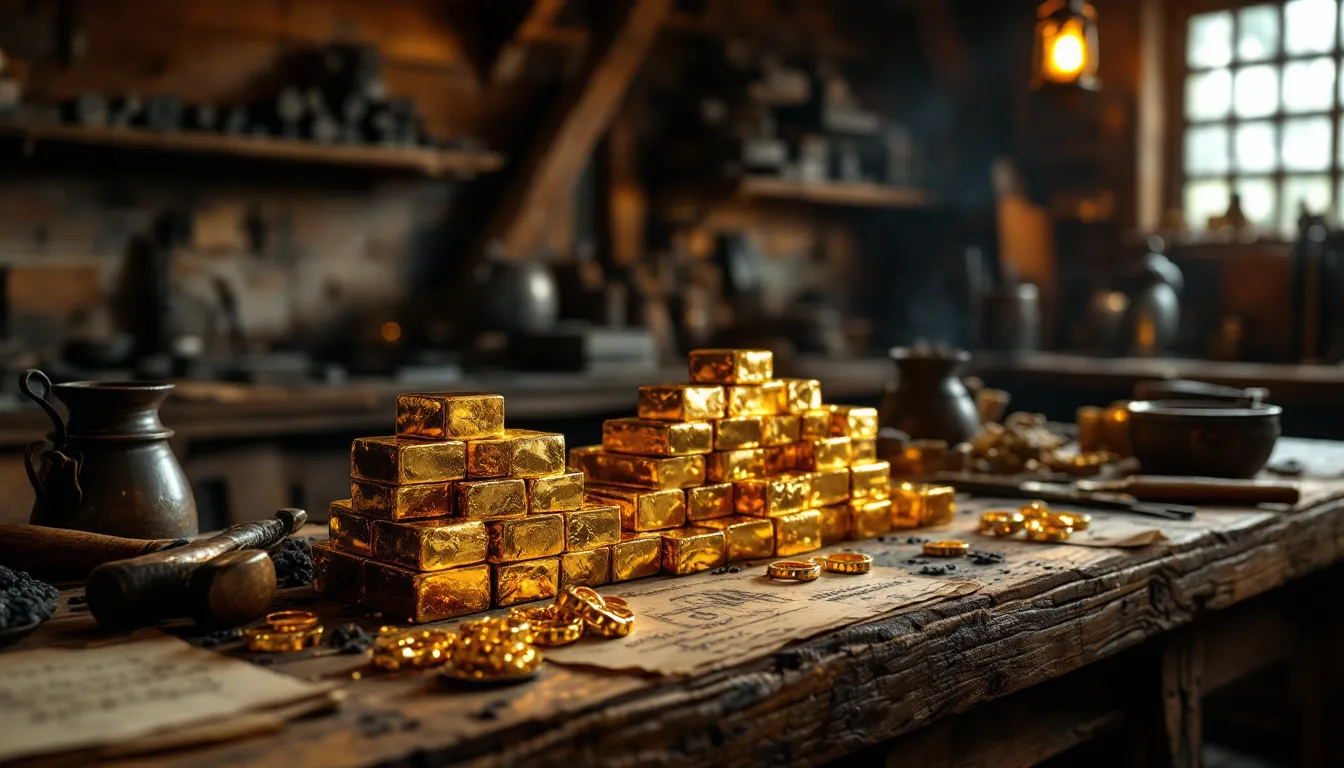
Gold ingots in Skyrim aren’t just shiny objects cluttering your inventory, they’re the backbone of profitable smithing, a fast track to leveling your crafting skills, and the key ingredient in some of the game’s most valuable items. Whether you’re grinding out your Smithing skill to hit 100 or just trying to turn a profit selling enchanted jewelry, understanding how to efficiently gather and use gold ingots will transform your playthrough.
Unlike other metals that serve primarily combat purposes, gold occupies a unique niche in Skyrim’s economy. It won’t help you forge better armor for direct protection, but it’ll make you rich, boost your Smithing faster than most alternatives, and unlock crafting opportunities that other materials simply can’t match. This guide breaks down everything you need to know: where to find gold ingots, how to farm them efficiently, what’s worth crafting, and how to avoid the common pitfalls that waste both time and resources.
Table of Contents
ToggleKey Takeaways
- Gold ingots in Skyrim are essential for crafting valuable jewelry and enchanted items that generate massive profits, with enchanted gold necklaces worth 2,500+ Septims using Grand soul gems.
- The Transmute Mineral Ore spell is the most efficient gold farming method—convert abundant iron ore into gold ore, then smelt and craft jewelry for rapid Smithing leveling.
- Kolskeggr Mine offers the richest gold ore source with 17 veins respawning every 30 in-game days, making it the cornerstone of any serious gold ingot farming strategy.
- Gold jewelry crafting provides exceptional experience-to-material ratios, allowing players to power-level Smithing from 0 to 100 without expensive materials.
- Always enchant gold jewelry before selling to maximize profit—invest in Speech perks like Merchant and Master Trader to access high-capacity merchants and dump valuable items efficiently.
What Are Gold Ingots in Skyrim?
Gold ingots are refined metal bars created by smelting gold ore at any smelter in Skyrim. Each gold ore yields one gold ingot after smelting. Unlike iron, steel, or other combat-oriented materials, gold ingots serve primarily economic and crafting functions rather than producing protective armor.
In Skyrim’s item classification, gold ingots fall under the Smithing category with an item ID of 0005AD9E. They weigh 1 unit each and have a base value of 100 Septims, though actual merchant prices vary based on your Speech skill and perks. You’ll find them scattered throughout the game world, available for purchase from blacksmiths, or craftable from ore you mine yourself.
Gold ingots are essential for crafting all types of gold jewelry, rings, necklaces, and circlets, as well as being a required component for certain unique items like Dragon armor variants. They’re also one of the most weight-efficient materials for leveling Smithing, since jewelry has excellent value-to-weight ratios compared to bulky armor pieces.
The metal itself doesn’t require any Smithing perks to work with, making it accessible even at level 1. This accessibility, combined with high profit margins on crafted jewelry, makes gold ingots one of the first materials serious crafters seek out.
Why Gold Ingots Matter for Your Skyrim Playthrough
Gold ingots occupy a strategic position in Skyrim’s crafting ecosystem. They bridge the gap between raw resource gathering and profitable endgame loops, offering benefits that extend far beyond simple wealth accumulation.
Crafting Valuable Jewelry
Jewelry crafted from gold ingots offers some of the best value-to-weight ratios in the entire game. A single gold ring requires only one gold ingot and has a base value of 75 Septims, while a gold necklace (requiring one gold ingot) is worth 120 Septims base.
This becomes exponentially more valuable when you factor in enchanting. A gold necklace enchanted with a valuable effect like Fortify Destruction can sell for thousands of Septims depending on the strength of your soul gem and Enchanting skill. Players running character builds focused on enchanting often prioritize gold ingot stockpiles specifically for this profitable crafting loop.
The lack of gemstone requirements for basic gold jewelry makes it incredibly accessible. You don’t need to hunt down flawless diamonds or rubies, just gold and a smelter.
Leveling Up Your Smithing Skill
Gold jewelry provides exceptional Smithing experience relative to material investment. The experience gained from crafting an item correlates to its value, and since gold jewelry has high base values with minimal material requirements, the XP-per-ingot ratio outperforms most armor crafting.
Crafting gold rings repeatedly is a proven power-leveling strategy. With a steady supply of gold ore from mining and the Transmute spell (more on that later), players can easily grind from Smithing 0 to 100 without burning through expensive materials like ebony or quicksilver.
The portability matters too. Hauling 50 iron ingots to craft daggers means serious weight management. Carrying 50 gold ingots to make rings? Much more manageable, and you can craft them anywhere with a forge.
Creating Unique Equipment and Items
Beyond basic jewelry, gold ingots are required components for several unique and powerful items. Dragonscale Armor and Dragonplate Armor both require gold ingots as part of their crafting recipes, combining them with dragon scales or bones.
The Aetherial Crown, one of the rewards from the “Lost to the Ages” quest, requires gold ingots if you choose to craft it at the Aetherium Forge. While the Crown itself doesn’t consume gold directly, understanding gold’s role in high-level crafting helps when planning material gathering for endgame equipment.
Gold is also used in certain jewelry pieces that accept gemstone settings, like gold diamond necklaces or gold ruby circlets. These aren’t just vanity items, they’re enchanting bases with higher value multipliers, meaning better returns when sold after enchanting.
Where to Find Gold Ingots in Skyrim
Gold ingots appear throughout Skyrim via multiple acquisition methods. Knowing where to look saves time and maximizes your crafting efficiency.
Purchasing Gold Ingots from Merchants
Most blacksmiths and general goods merchants stock gold ingots in limited quantities. Their inventory typically refreshes every 48 in-game hours, making merchant runs a reliable but slow method for stockpiling.
Reliable merchant locations:
- Adrianne Avenicci (Whiterun) – Blacksmith near the city entrance
- Eorlund Gray-Mane (Whiterun, Skyforge) – High-level smithing merchant
- Balimund (Riften) – Blacksmith with consistent metal stock
- Moth gro-Bagol (Markarth) – Understone Keep blacksmith
- Alvor (Riverwood) – Early-game accessible blacksmith
Merchants usually carry 2-4 gold ingots per restock, priced between 60-100 Septims each depending on your Speech skill. This method works best as a supplement to mining and smelting rather than a primary source.
The benefit? Zero effort beyond fast travel and gold investment. The downside? Limited quantities mean you can’t bulk-purchase your way to a massive stockpile without excessive waiting.
Looting Gold Ingots from Locations
Gold ingots spawn as loot in various locations, particularly in Dwemer ruins, bandit hideouts, and anywhere blacksmithing takes place. They appear both as static loot in specific locations and as random loot in containers.
Notable static locations:
- Halted Stream Camp – Contains 16 gold ore veins plus a Transmute spellbook (more valuable than ingots, but worth noting)
- Kolskeggr Mine – The richest gold ore source, with 17 ore veins
- Nchuand-Zel Excavation Site (Markarth) – Contains several gold ingots in the excavation area
- Lost Knife Hideout – Gold ingots in the bandit chief’s chamber
- Purewater Run – Dwemer ruin with scattered ingots
When exploring Dwemer ruins or bandit forts, check smelters, blacksmith areas, and storage rooms. Gold ingots frequently spawn near forges or in chests alongside other smithing materials.
Random loot tables mean you’ll occasionally find gold ingots in boss chests, but don’t rely on RNG for consistent farming.
Receiving Gold Ingots as Quest Rewards
Certain quests reward gold ingots as part of their completion bonuses, though these instances are relatively rare compared to Septims or equipment rewards.
The Dawnguard DLC questline occasionally provides smithing materials including gold ingots through radiant quests. Similarly, some Miscellaneous objectives from jarls or stewards may reward crafting materials, though the specific items vary.
Quest rewards are unreliable for farming but serve as nice bonuses during normal gameplay. Don’t build your gold ingot strategy around quest completion, mining and smelting remain far more efficient.
How to Craft Gold Ingots from Gold Ore
Smelting gold ore into ingots is straightforward: bring gold ore to any smelter, interact with it, and select gold ore from the menu. The conversion is 1:1, one ore becomes one ingot. The real strategy lies in efficiently gathering ore and converting cheaper materials.
Best Gold Ore Mining Locations
Kolskeggr Mine stands as the undisputed gold ore farming champion. Located southeast of Markarth in the Reach, this mine contains 17 gold ore veins, more than any other location in the game. The mine is initially occupied by Forsworn, so clear them out before mining.
Once cleared, Kolskeggr’s veins respawn every 30 in-game days (10 in-game days if you have the unofficial patch installed, depending on your version). With all 17 veins, a single run nets you 51 ore minimum (assuming you get 3 ore per vein with sufficient pickaxe strikes).
Other valuable gold ore locations:
- Halted Stream Camp (north of Whiterun) – 16 iron ore veins, but contains the Transmute Mineral Ore spellbook, making it more valuable for converting iron to gold
- Lost Prospect Mine (Riften area) – 3 gold ore veins
- Darkshade (wilderness east of Whiterun) – Small mine with 4 gold ore veins
- Labyrinthian – Contains scattered gold ore, though the dungeon difficulty makes it inefficient purely for mining
Mining efficiency tip: The Notched Pickaxe (found at the Throat of the World, embedded in a rock near the word wall) provides a +5 Smithing bonus while equipped. It doesn’t mine faster, but the bonus is useful if you’re mining while actively leveling Smithing.
Using the Transmute Mineral Ore Spell
The Transmute Mineral Ore spell transforms the entire gold farming game. This Alteration spell converts iron ore into silver ore, and silver ore into gold ore. Since iron ore is the most abundant ore type in Skyrim, this effectively gives you unlimited gold ore access.
Finding the Transmute spell:
The spellbook sits on a table in Halted Stream Camp, a small bandit encampment directly north of Whiterun. Clear the bandits, enter the mine section, and you’ll find the book in the first room. It’s a guaranteed spawn, not random loot.
Once learned, the spell costs 88 Magicka per cast at base (less with Alteration perks and cost reduction enchantments). Each cast converts one ore in your inventory from iron→silver or silver→gold. Many players who are focused on efficient leveling strategies consider this spell essential for Smithing power-leveling.
The conversion process:
- Mine every iron ore vein you encounter (there are hundreds across Skyrim)
- Cast Transmute repeatedly on your iron ore to convert it all to silver
- Cast Transmute again on your silver ore to convert it all to gold
- Smelt the gold ore into ingots
- Craft jewelry for Smithing XP and profit
This loop transforms the most common crafting material into the most profitable one. A single trip to a large iron mine like Halted Stream Camp or Iron-Breaker Mine can yield 30+ iron ore, which becomes 30+ gold ore after transmutation.
The spell also levels Alteration with each cast, creating a secondary skill leveling benefit. Players often transmute their entire ore stockpile while waiting for merchants to restock, efficiently using downtime.
What You Can Craft with Gold Ingots
Gold ingots transform into several item categories, each serving different strategic purposes. Understanding what to craft and when maximizes both your Smithing progression and your Septim income.
Gold Rings and Necklaces
Gold rings require one gold ingot each and have a base value of 75 Septims. Gold necklaces also require one gold ingot but are worth 120 Septims base. Both can be crafted at any forge without prerequisites.
For pure Smithing experience grinding, necklaces are technically more efficient since XP scales with item value. But, the difference is marginal, both are excellent options. Many players craft rings simply because the animation and menu navigation feels faster.
Adding gemstones increases both value and variety:
- Gold Diamond Necklace – 1 gold ingot + 1 flawless diamond = 1,000 Septims base value
- Gold Ruby Necklace – 1 gold ingot + 1 flawless ruby = 650 Septims base value
- Gold Emerald Ring – 1 gold ingot + 1 flawless emerald = 437 Septims base value
Gemstone jewelry provides better value per ingot but requires gem hunting. For mass production and Smithing leveling, plain gold jewelry remains more practical.
Enchanted Jewelry for Maximum Profit
The real money comes from enchanting your gold jewelry before selling. An unenchanted gold necklace might sell for 120 Septims. The same necklace enchanted with Fortify Sneak using a Grand Soul Gem can sell for 2,000+ Septims.
This creates Skyrim’s most profitable crafting loop:
- Craft gold jewelry (levels Smithing)
- Enchant the jewelry with valuable effects (levels Enchanting)
- Sell to merchants for massive profit
- Use profits to buy more materials, soul gems, or training
Most valuable enchantments for jewelry:
- Fortify Sneak (necklaces, rings) – Very high value multiplier
- Fortify Smithing (necklaces, rings) – High demand from players using crafting loops
- Fortify Destruction/Conjuration (necklaces) – Excellent value with Grand souls
- Banish (rings, if you can apply it via exploits/mods) – Notoriously valuable
The enchantment value multiplier means even petty soul gems create profit, but Grand soul gems maximize returns. Hunters focused on optimizing game economy strategies often maintain soul gem farming routes specifically to support enchanted jewelry production.
Dragon Armor and Unique Weapons
Gold ingots are required components for Dragon-tier armor crafting, which represents some of the best light and heavy armor in the game.
Dragonscale Armor (light armor) requires:
- Dragon scales + leather strips + gold ingots (quantity varies by piece)
Dragonplate Armor (heavy armor) requires:
- Dragon bones + leather strips + gold ingots
Specific recipes vary by armor piece, but helmets, gauntlets, boots, and cuirasses each consume 1-2 gold ingots alongside their primary dragon materials.
Crafting full sets of Dragon armor requires substantial gold ingot stockpiles, plan on needing 8-12 gold ingots per complete armor set. Since dragon materials are time-gated by dragon encounters, gold ingots often become the bottleneck resource for players eager to craft their endgame armor.
The Aetherial Crown, craftable during the Dawnguard quest “Lost to the Ages,” also requires gold ingots, though the exact recipe depends on which Aetherial item you choose to forge.
Advanced Gold Ingot Farming Strategies
Casual gathering provides enough gold for occasional crafting, but serious Smithing progression or wealth generation requires systematic farming approaches.
The Transmute-Mine-Smelt Loop
This method represents the gold standard (pun intended) for gold ingot farming efficiency:
Step 1: Mine iron ore from high-density locations. Iron-Breaker Mine (Dawnstar) has 8 veins, Halted Stream Camp has 16 veins, and Gloombound Mine (Orc stronghold, requires Orc friendship) has 16 veins.
Step 2: Use Transmute Mineral Ore to convert all iron ore to gold ore. Each cast consumes magicka, so players with low Magicka pools should:
- Equip Magicka regeneration gear
- Consume Magicka potions
- Wait between casts for regeneration
- Use the Wait function to speed up regeneration
Step 3: Smelt all gold ore into gold ingots at any smelter. Smelters are found in every major city, plus many mines and small settlements.
Step 4: Craft gold jewelry to level Smithing and prepare enchanting bases.
Step 5: Optionally enchant jewelry for maximum profit before selling.
This loop transforms common iron ore into premium gold ingots, then into valuable jewelry, then into enchanted luxury goods worth thousands. A single efficient run can yield 30+ gold ingots, enough for significant Smithing progression.
The beauty of this system is sustainability. Iron ore respawns every 30 in-game days, and there are dozens of iron mines across Skyrim. You’ll never run out of source material.
Respawning Ore Veins and Merchant Inventory
Understanding respawn mechanics prevents wasted trips and maximizes farming efficiency.
Ore vein respawn: Mining veins respawn every 30 in-game days (approximately 720 in-game hours). Fast traveling, waiting, or sleeping all advance the timer. Some players use the Wait function repeatedly at a different location to force respawns after marking their calendar.
Merchant inventory respawn: Merchant stock refreshes every 48 in-game hours. This includes both the items they sell and their available gold for purchases. To reset a merchant:
- Note the time when you last traded
- Wait or adventure for 48+ hours
- Return to find fresh inventory and restored gold
Pro tip: Create a mining circuit that matches the 30-day respawn timer. Visit Kolskeggr Mine on day 1, clear it completely, then visit other content for 30 days before returning. When you return, the veins have respawned and you can repeat the massive harvest.
Some players maintain a notebook or spreadsheet tracking which mines they’ve cleared and when they’re eligible for re-harvesting. This level of optimization isn’t necessary for casual play but dramatically increases efficiency for dedicated farmers.
Fast travel considerations: Fast traveling advances in-game time based on distance traveled. Long journeys (like Markarth to Riften) can advance several hours, helping you reach respawn timers faster. Strategic fast travel routing can shave real-time minutes off your farming loops.
Maximizing Profit: Turning Gold Ingots into Septims
Gold ingots have value, but proper conversion into Septims requires understanding crafting priorities and merchant limitations.
Most Profitable Jewelry to Craft
When selling unenchanted jewelry, gold necklaces provide slightly better value than rings (120 vs. 75 Septims), but both are weight-efficient profit generators.
Gemstone jewelry offers better returns per ingot:
Ranked by profit per gold ingot (unenchanted):
- Gold Diamond Necklace – 1,000 Septims (requires flawless diamond)
- Gold Ruby Necklace – 650 Septims (requires flawless ruby)
- Gold Emerald Necklace – 600 Septims (requires flawless emerald)
- Gold Sapphire Necklace – 500 Septims (requires flawless sapphire)
- Gold Necklace (plain) – 120 Septims
But, gemstone availability is the limiting factor. Unless you’re actively farming dungeons for gems or purchasing them from merchants, you won’t have steady access to flawless stones.
Enchanted jewelry profitability:
Enchanting multiplies jewelry value exponentially. The formula is complex, but generally:
- Petty soul enchantments: 2-3x base value
- Lesser/Common souls: 4-6x base value
- Greater souls: 8-12x base value
- Grand souls: 15-25x base value
A gold necklace (120 base) enchanted with Fortify Sneak using a Grand soul can sell for 2,500+ Septims. That’s a 20x multiplier on a single gold ingot investment.
The catch? Merchants rarely have enough gold to purchase high-value items. A 2,500 Septim enchanted necklace is worthless if the merchant only has 750 gold available.
Best Merchants for Selling Gold Items
Merchant gold limitations create bottlenecks when selling valuable jewelry. Standard merchants carry 500-1,000 gold, while specialized merchants may have 1,500-2,000.
High-gold merchants:
- Fences (Thieves Guild) – 4,000+ gold after guild progression and investment perks
- Tonilia (Thieves Guild) – 1,000 base, up to 4,000 with improvements
- Maven Black-Briar’s merchant contacts (after Guild quests) – Various high limits
- Any merchant + Speech perks – The Investor perk adds 500 gold to merchant inventory
Speech skill impact:
Higher Speech skill increases selling prices. At Speech 100 with all relevant perks:
- Haggling (5 ranks) – Improves buying/selling prices
- Allure – 10% better prices with opposite gender
- Merchant – Sell any item type to any merchant
- Investor – Invest 500 gold to permanently increase merchant gold by 500
- Master Trader – Every merchant gains 1,000 additional gold
With Master Trader, even basic merchants become viable outlets for expensive jewelry. Combined with the Merchant perk (sell anything to anyone), you can offload enchanted jewelry to innkeepers, apothecaries, and general goods traders instead of just blacksmiths.
Selling strategy:
- Craft large batches of jewelry
- Enchant everything with valuable effects
- Create a merchant circuit hitting 5-6 high-gold traders
- Sell until each merchant runs out of gold
- Wait 48 hours and repeat
This approach converts hundreds of gold ingots into tens of thousands of Septims per week (in-game time), funding everything from house purchases to skill training.
Common Mistakes to Avoid When Working with Gold Ingots
Even experienced players fall into predictable traps when farming and using gold ingots. Avoiding these mistakes saves time, resources, and frustration.
Selling gold ore instead of smelting it first: Gold ore is worth 50 Septims. Gold ingots are worth 100 Septims. Always smelt before selling unless you’re desperately over-encumbered and need immediate weight reduction.
Transmuting without sufficient Magicka: Casting Transmute with a tiny Magicka pool means constant waiting for regeneration. If you plan to transmute large ore batches, equip Magicka regeneration gear or bring potions. Alternatively, invest in Alteration cost reduction enchantments to lower the 88 Magicka cost per cast.
Ignoring the Transmute spellbook at Halted Stream Camp: This is one of the most valuable finds in the early game. Missing it means farming gold ore manually instead of converting abundant iron ore. Always grab this book on every playthrough, regardless of build.
Crafting complex gemstone jewelry for Smithing leveling: Flawless diamonds are rare. Using them to craft gold diamond necklaces for Smithing XP is inefficient when plain gold rings provide nearly identical experience for a fraction of the resource investment. Save gemstones for high-value enchanted pieces you plan to sell, not mass Smithing grinding.
Not investing in merchant gold capacity: The Speech perks Investor and Master Trader dramatically improve selling efficiency. Skipping these perks means constantly cycling through merchants who can’t afford your goods. If you’re running an enchanting-smithing economy loop, these perks pay for themselves within hours.
Forgetting to track ore vein respawn timers: Returning to Kolskeggr Mine after only 15 in-game days wastes a trip. Keep mental (or written) notes of when you cleared major mines so you can optimize your farming routes.
Over-prioritizing gold over iron when starting out: New players sometimes focus on finding gold ore while ignoring iron completely. With the Transmute spell, iron becomes gold, and iron is everywhere. Mine iron aggressively early game, then transmute it all once you find the spellbook.
Selling unenchanted jewelry when you have soul gems available: An unenchanted gold ring sells for 75 Septims. The same ring enchanted with even a petty soul effect sells for 200-300 Septims. If you have soul gems sitting in your inventory, always enchant first unless you’re specifically grinding Smithing XP.
Neglecting to clear Kolskeggr Mine early: The Forsworn occupying Kolskeggr aren’t particularly tough, even at low levels. Clearing this mine early gives you access to the best gold ore source in the game for your entire playthrough. Many players put it off unnecessarily and miss out on easy gold farming.
Hoarding gold ingots without purpose: Gold ingots don’t gain value sitting in storage. Convert them to jewelry, enchant that jewelry, and sell it. The Septims you earn can fund skill training, which levels you faster than saving materials “for later.”
Conclusion
Gold ingots might not help you tank dragon breath or one-shot draugr, but they’re arguably the most versatile crafting material in Skyrim. From power-leveling Smithing to generating wealth that funds every other progression system, mastering gold ingot acquisition and usage unlocks efficiency most players never achieve.
The Transmute spell transforms the entire economy once you understand its implications. Suddenly every iron mine becomes a gold mine, every bandit cave with ore becomes profitable, and your Smithing skill shoots upward while your coin purse gets heavier. Pair that with enchanting, and you’ve built a self-sustaining economy that makes quest rewards look like pocket change.
Whether you’re crafting your first gold ring or optimizing your 47th enchanted necklace batch, the principles remain the same: mine efficiently, transmute consistently, craft strategically, and sell smart. Get those fundamentals down, and you’ll never worry about Septims or Smithing skill again.