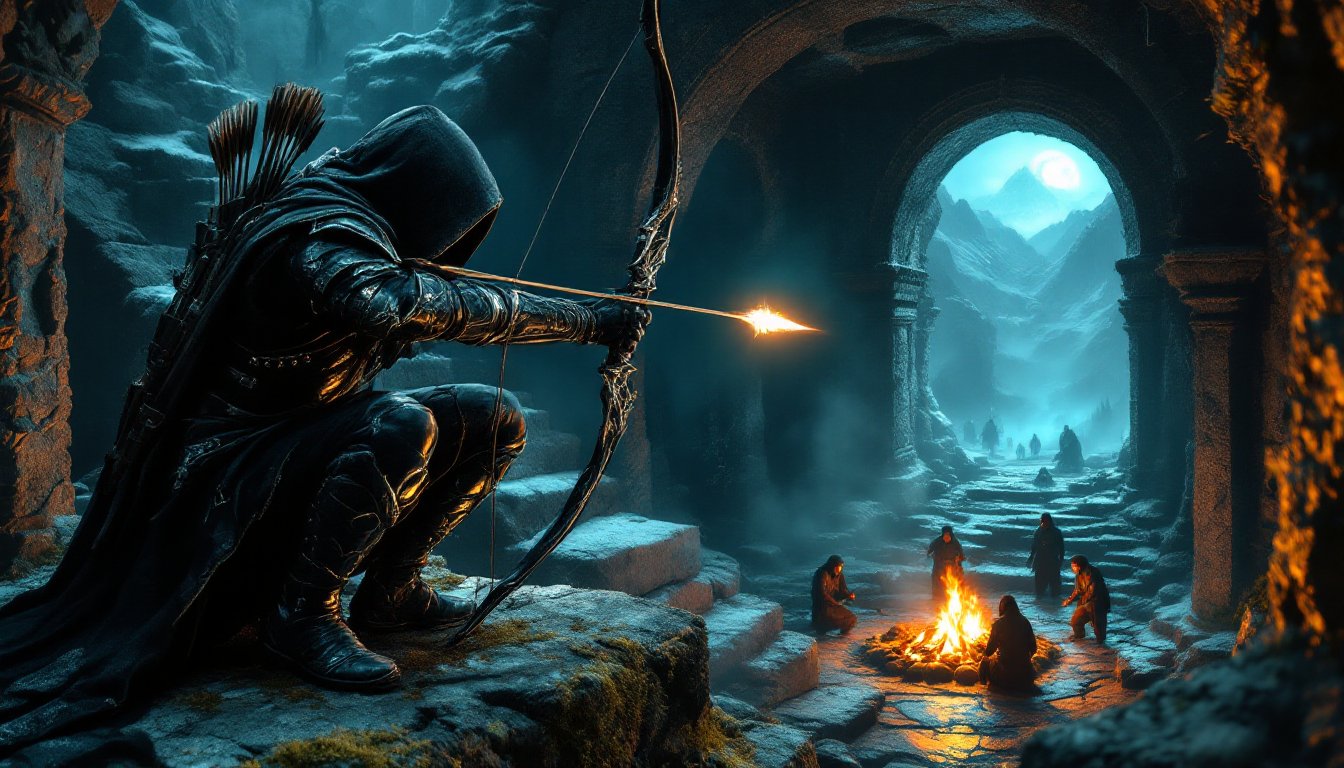
Skyrim’s combat has always been the elephant in the room. You can mod in 4K textures, reshade the entire game until it looks photorealistic, and populate Whiterun with 500 NPCs, but the moment you swing a sword or fire an arrow, you’re reminded that this is a 2011 game at its core. The floaty hits, the janky animations, the brain-dead enemy AI that runs straight at you in a predictable pattern, it all feels dated.
But here’s the good news: the modding community has spent over a decade refining, overhauling, and straight-up reinventing Skyrim’s combat system. In 2026, you have access to an arsenal of mods that can transform clunky sword-swinging into fluid, tactical encounters that rival modern action RPGs. Whether you’re looking to add dodge rolls, completely overhaul enemy AI, or make archery feel like an actual skill-based discipline, there’s a mod (or ten) for that.
This guide cuts through the noise. We’re covering the best combat mods available right now, from complete system overhauls to animation replacers, AI enhancements, and specialized improvements for magic, archery, and melee. You’ll also learn how to combine them without turning your game into a crash-fest.
Table of Contents
ToggleKey Takeaways
- Skyrim combat mods transform dated vanilla mechanics into fluid, tactical encounters by overhauling animations, AI, and damage systems through overhauls like Wildcat, Engarde, and Ultimate Combat SE.
- Foundation mods like Dynamic Animation Replacer (DAR), attack behavior packs, and dodge mods add visual variety and gameplay depth, making melee combat feel responsive and giving players essential evasion options.
- Combat mod load order is critical—animation frameworks must load before overhauls, and compatibility patches are essential to prevent crashes and conflicts between script-heavy systems.
- Performance impact varies significantly, with lightweight tweaks causing minimal FPS drops while complex AI and physics-based mods can reduce performance by 5-10 FPS, requiring careful matching of mod intensity to your hardware.
- Magic and archery mods like Apocalypse, Mysticism, and Archery Gameplay Overhaul add spell variety and ranged depth, ensuring spellcasters and archers remain viable throughout endgame content.
- Building a focused 3-5 mod loadout tailored to your playstyle—tactical, high-action, mage-focused, or difficulty-purist—delivers better stability and immersion than stacking excessive mods without intentional compatibility planning.
Why Vanilla Skyrim Combat Needs an Upgrade
Let’s be honest: vanilla Skyrim combat is serviceable at best and mind-numbingly repetitive at worst. The core issues haven’t changed since launch.
First, there’s the lack of weight and impact. Swinging a greatsword feels like waving a pool noodle. Hit reactions are minimal, and enemies barely flinch when you land what should be a devastating blow. The feedback loop that makes combat satisfying in games like Dark Souls or Monster Hunter just isn’t there.
Second, the AI is laughably simple. Enemies charge directly at you, occasionally power attack, and that’s about it. Mages stand still casting the same spell. Archers don’t reposition. There’s no real tactics, no adaptation, no challenge beyond raw stat differences.
Third, animations are stiff and limited. Your character has maybe three attack animations per weapon type, all of which play out the same way regardless of timing or positioning. There’s no dodge, no directional attacks, no combat mobility beyond awkward circle-strafing.
Finally, the pacing is off. Combat encounters either end in three seconds or drag on as damage sponge enemies absorb dozens of hits. There’s no middle ground, no tension, no reason to engage with the systems beyond “click until dead.”
These aren’t minor nitpicks, they’re fundamental design limitations that show the game’s age. Skyrim was never meant to be a dedicated combat game, and Bethesda prioritized breadth over depth. That’s where mods come in.
What Makes a Great Combat Mod for Skyrim
Not all combat mods are created equal. Some add flashy features that look cool in screenshots but break immersion. Others are so performance-intensive they turn your game into a slideshow. The best combat mods balance improvement with stability.
A great combat mod should enhance immersion, not shatter it. If you’re adding dodge rolls, they should feel like a natural extension of the game’s movement system, not a Devil May Cry transplant. If you’re overhauling AI, enemies should be smarter and more challenging, not psychic gods who parry every attack frame-perfectly.
It should also respect player agency. The worst combat mods are the ones that force a specific playstyle or make the game frustratingly difficult without giving you the tools to adapt. Good mods expand your options, they don’t lock you into one “correct” way to play.
Finally, great combat mods acknowledge that Skyrim is an RPG first and an action game second. Stats, perks, and character builds should still matter. If a mod turns combat into a pure twitch-reflex skill check, it’s fighting against the game’s DNA.
Compatibility and Load Order Considerations
Load order is the dark art of Skyrim modding. Combat mods are especially prone to conflicts because they often touch the same systems: animations, AI packages, damage calculations, and perk trees.
The general rule: framework and animation mods load first, then overhauls, then specific tweaks. For example, if you’re using Dynamic Animation Replacer (DAR), it needs to load before any mod that uses custom attack animations. If you’re running Engarde and Wildcat together (which can work with patches), Wildcat should typically load after Engarde to let its injury system take priority.
Always check mod pages for compatibility notes. Most popular combat mods have been tested together and authors will explicitly state known conflicts. Use tools like LOOT (Load Order Optimization Tool) as a baseline, but don’t blindly trust it, manual tweaking is often necessary.
Patches exist for most major mod combinations. Check the Nexus Mods pages for your chosen mods and look for compatibility patches in the files section or user-created patches in the posts.
Performance Impact and System Requirements
Combat mods range from virtually free (simple stat tweaks) to FPS-destroyers (complex animation systems with real-time physics).
Low-impact mods include most damage multiplier tweaks, timed block adjustments, and basic AI edits. These change variables in the game’s existing systems without adding new calculations. You’ll see maybe a 1-2 FPS drop at most.
Medium-impact mods are animation replacers and AI overhauls that add new behavior trees. These require more CPU overhead, especially in large battles with multiple enemies. Expect a 5-10 FPS drop in crowded encounters.
High-impact mods include anything with physics-based interactions, precision hit detection, or script-heavy features like dynamic difficulty scaling. These can tank performance on older systems. If you’re running a mid-tier GPU from 2020 or earlier, be cautious with mods that add real-time collision detection or procedural animation blending.
As a benchmark: a GTX 1660 or RX 5600 XT can handle most combat mod setups at 1080p/60fps. If you’re on something beefier like an RTX 3070 or RX 6800, you can stack multiple heavy mods without issue. Older hardware might struggle with more than two or three major overhauls running simultaneously.
Best Overhaul Combat Mods for Complete System Redesigns
If you want to transform Skyrim’s combat from the ground up, overhaul mods are your starting point. These mods rewrite core systems, damage calculation, stamina management, timed blocking, injury mechanics, to create something that feels entirely new.
Wildcat Combat and Archery Overhaul
Wildcat remains the gold standard for combat overhauls in 2026. It doesn’t try to turn Skyrim into Dark Souls: instead, it amplifies what’s already there and makes every decision matter.
The core mechanic is simple but transformative: everyone does more damage, including you. This creates a high-risk, high-reward dynamic where positioning and timing actually matter. Getting surrounded is genuinely dangerous. Landing a sneak attack or a well-timed power attack can turn the tide instantly.
Wildcat also introduces injuries, landing heavy hits can stagger, stun, or even knock down opponents. The same applies to you, which forces you to play smarter. Stamina management becomes critical because every action drains it, and running out leaves you vulnerable.
The mod’s AI adjustments make enemies more aggressive without being unfair. They’ll flank, retreat when injured, and use power attacks more intelligently. Combined with the damage multipliers, even basic bandits become threats early game.
Archery gets a boost too. Arrows deal significantly more damage, but so do enemy arrows. If you’re not using cover and dodging shots, you’ll die fast. It makes ranged combat feel tense and deliberate rather than a safe exploit.
Wildcat is highly customizable via MCM (Mod Configuration Menu). You can tweak damage multipliers, injury frequency, stamina drain rates, and AI aggression to suit your preferred difficulty. It’s also lightweight and compatible with most other mods, making it an excellent foundation for larger load orders.
Engarde Combat Overhaul
Engarde takes a different approach than Wildcat. Where Wildcat focuses on lethality and aggression, Engarde emphasizes stamina economy, deliberate combat flow, and meaningful blocking.
The standout feature is the timed block system. If you raise your shield or weapon just before an enemy attack lands, you’ll perform a perfect block that drains minimal stamina and can stagger the attacker. This single mechanic transforms blocking from a passive “hold button” action into an active skill.
Engarde also reworks stamina costs across the board. Power attacks, bashing, and blocking all drain stamina heavily, forcing you to manage resources mid-fight. Running out of stamina leaves you unable to block or attack effectively, creating natural ebb-and-flow to encounters.
The mod introduces attack commitment, once you start a power attack, you’re locked into the animation. This prevents the vanilla tactic of animation-canceling and spamming power attacks without consequence. You have to commit to your decisions.
AI improvements make enemies more defensive. They’ll block more often, use bashes to interrupt your attacks, and disengage when low on stamina. Fights feel more like duels than DPS races.
Engarde pairs beautifully with animation mods (more on those later) because its mechanics reward timing and positioning. It’s slightly more performance-intensive than Wildcat due to the timed block calculations, but still very reasonable for most systems.
Ultimate Combat SE
Ultimate Combat SE is the heavyweight option, packed with features but also the most complex to configure properly.
The mod’s claim to fame is its locational damage system. Headshots with arrows deal massive damage, while hitting armored body parts reduces your effectiveness. This adds a layer of tactical depth absent from vanilla, especially for archers and mages targeting specific body parts.
Ultimate Combat also includes dynamic difficulty scaling. As you level up, enemies don’t just get more HP, they get smarter, use better tactics, and coordinate attacks more effectively. The mod tracks your combat performance and adjusts enemy behavior in real-time, though this feature is divisive (some players find it inconsistent).
The poise system is borrowed conceptually from Dark Souls. Each hit you take fills a poise meter, and when it maxes out, you’re staggered. Heavy armor increases poise, making tank builds more viable. Light armor users need to focus on evasion, which plays well with dodge mods.
AI gets a major upgrade. Enemies will coordinate ambushes, call for backup, and retreat strategically. Mages will reposition constantly, and archers will maintain distance. It makes every encounter feel more dynamic, though it can occasionally lead to enemies behaving erratically.
The downside: Ultimate Combat is script-heavy and can cause performance issues if you’re already running a demanding load order. It also conflicts with several popular mods, requiring patches and careful load order management. But if you can get it stable, it offers the most feature-rich combat experience available.
Top Animation and Movement Mods for Fluid Combat
Skyrim’s stiff, limited animations make combat feel like you’re piloting a wooden mannequin. Animation mods are the fastest way to make combat feel better, even if the underlying mechanics stay the same.
Attack Behavior Revamp and Dynamic Animation Replacers
Dynamic Animation Replacer (DAR) is the engine that powers modern combat animation mods. It’s a framework that allows mods to swap animations based on conditions: weapon type, stance, movement speed, even combat state. DAR itself doesn’t change animations, it enables other mods to do so dynamically.
Once you have DAR installed, you can layer animation packs on top. Attack Behavior Revamp (ABR) is the most popular choice. It replaces every vanilla attack animation with smoother, more varied alternatives. Two-handed swords get wide sweeping arcs, daggers get rapid stabs, maces get heavy overhead slams. Each weapon type feels distinct.
ABR also introduces directional attacks. Attacking while moving forward triggers different animations than attacking while backpedaling. It’s subtle but adds a ton of visual variety and makes combat feel more responsive.
Another standout is Elder Souls – Death Knight Animations, which gives your character aggressive, weighty combat animations inspired by, you guessed it, Dark Souls. It’s not for everyone (some find it too flashy for Skyrim’s tone), but it makes melee combat feel brutal and impactful.
For a more vanilla-plus approach, Leviathan Animations offers grounded, realistic movement that doesn’t stray far from Skyrim’s original aesthetic. It’s perfect if you want improvement without radical change.
All of these mods are compatible with each other as long as you manage load order correctly. DAR makes it easy to mix and match animation packs for different weapon types or playstyles, and players looking to maximize their character’s potential often pair these with perk adjustments to create synergistic builds.
The Ultimate Dodge Mod and TK Dodge RE
Vanilla Skyrim has no dodge. You can sprint away or awkwardly sidestep, but there’s no quick evasion option. Dodge mods fix this glaring omission.
The Ultimate Dodge Mod (TUDM) is the most feature-complete option. It adds a customizable dodge roll or sidestep mapped to a hotkey (typically double-tap movement keys or a dedicated button). The dodge has i-frames (invincibility frames), making it a true defensive tool rather than just a repositioning gimmick.
TUDM lets you tweak everything: dodge distance, stamina cost, i-frame duration, cooldown, and even whether you can dodge mid-attack. This flexibility is crucial because dodge mechanics can easily feel overpowered if not balanced properly.
The mod also includes optional features like automatic dodging (the game dodges for you when an attack is incoming, based on your reflexes stat) and directional dodging (forward dodges are faster but cover less distance than backward dodges). These are more experimental and not recommended for most playthroughs.
TK Dodge RE is the lightweight alternative. It’s a modernized version of the classic TK Dodge mod, stripped down to the essentials. You get a simple dodge roll with i-frames, minimal stamina cost, and that’s it. No bloat, no scripts running constantly in the background.
TK Dodge RE is better for performance and compatibility, while TUDM offers more customization and features. Both work with all major combat overhauls, though you’ll want to adjust stamina costs to match your overall difficulty setup.
One warning: dodge mods can trivialize combat if stamina costs are too low or i-frame duration is too generous. Start conservative, make dodges expensive and risky, and adjust from there. Combat should reward smart dodging, not spamming.
Essential AI and Enemy Behavior Enhancement Mods
Even the best combat mechanics fall flat if enemies are predictable. AI mods make opponents smarter, more aggressive, and far more dangerous.
Improved Combat AI and Tactics
Blade and Blunt is a lightweight but effective combat AI overhaul. It focuses on making enemies use the tools they already have more intelligently.
Enemies will bash more frequently to interrupt your attacks. Mages will keep their distance and reposition when you close in. Archers will backpedal and switch to melee weapons if you get too close. These aren’t revolutionary behaviors, but they make a huge difference in practice.
The mod also adjusts enemy stamina management. Opponents won’t spam power attacks recklessly, they’ll save stamina for blocks and bashes, making them harder to overwhelm with aggression. Combined with a mod like Wildcat or Engarde, this creates genuinely tactical fights.
Skyrim Revamped – Complete Enemy Overhaul (SRCEO) goes further, redesigning enemy stats, abilities, and behavior from scratch. Bandits get class-specific perks, draugr use more shouts, and dragons gain new attack patterns.
The mod’s standout feature is encounter variety. You’ll face enemies with different gear, abilities, and tactics even within the same faction. Not every bandit is the same, which keeps combat fresh hundreds of hours into a playthrough.
SRCEO also makes enemies scale more intelligently. Instead of just boosting HP and damage, higher-level enemies gain new abilities and tactics. A level 30 bandit chief will use poisons, healing potions, and tactical retreats that a level 5 bandit wouldn’t consider.
Vigor – Enhanced Combat combines AI improvements with damage and stamina tweaks. Its AI changes are subtle but effective: enemies strafe more, use terrain better, and coordinate attacks when fighting in groups. The mod is also highly modular, you can enable just the AI components and leave the rest, making it easy to integrate into existing setups.
All three mods work well with companion AI enhancements, ensuring your allies are as tactically competent as your enemies.
High-Level Enemy Overhauls
High-Level Enemies does one thing: makes late-game content actually challenging. Vanilla Skyrim becomes trivially easy once you hit level 40-50, even on Legendary difficulty. This mod fixes that.
It adds new enemy variants that only appear at high levels. These aren’t just stat-bloated versions of existing enemies, they have unique abilities, resistances, and tactics. You’ll face bandit warlords who use shouts, draugr death overlords with powerful AOE attacks, and vampire lords with devastating magic.
The mod also scales dragon encounters. High-level dragons gain additional breath attacks, aerial maneuvers, and the ability to summon lesser draugr or daedra mid-fight. It makes dragon fights feel like epic boss battles instead of repetitive HP sponges.
Pairing this with a combat overhaul is essential. High-Level Enemies assumes you’re using mods that increase lethality and player capability, because otherwise the new enemies are just frustrating.
Serious Civil War Consequences isn’t strictly a combat mod, but it makes Civil War battles far more intense. Battles feature more NPCs, smarter tactics, and realistic army formations. If you’ve avoided the Civil War questline because vanilla battles are boring moshpits, this mod transforms them into genuine large-scale conflicts.
Magic Combat Mods That Change the Spell-Slinging Game
Skyrim’s magic system is… underwhelming. Spells scale poorly, there’s no variety in playstyle, and mages end up either overpowered or useless depending on difficulty. Magic combat mods address all of this.
Apocalypse – Magic of Skyrim is the essential spell pack. It adds over 150 new spells across all schools, each designed to fill gaps in the vanilla spell list. You get utility spells, crowd control, summons, and damage options that actually scale into late game.
The mod’s strength is variety. Destruction gets spells beyond “fire/ice/lightning ball in three sizes.” You can cast chain lightning that bounces between targets, summon meteor storms, or create lingering fire walls. Illusion gains spells that manipulate enemy positioning and create distractions. Alteration gets defensive barriers and mobility enhancements.
Apocalypse spells are integrated into leveled lists, so you’ll find them in loot and merchant inventories naturally. The mod is also balanced carefully, spells are powerful but not game-breaking, and they have appropriate costs and casting times.
Mysticism – A Magic Overhaul takes a different approach. Instead of adding hundreds of new spells, it refines and rebalances the existing ones. Damage scaling is fixed so destruction magic stays viable at high levels. Duration and effect magnitudes are adjusted so utility spells actually matter.
The mod also overhauls magic perks to support different playstyles. You can specialize in dual-casting for raw power, quick-casting for hit-and-run tactics, or concentration spells for sustained damage. It makes mage builds feel as diverse as melee builds.
Ordinator – Perks of Skyrim isn’t a magic mod per se, but it completely redesigns the perk trees, including massive expansions to magic schools. You can build necromancers who reanimate armies, illusionists who turn enemies against each other, or battle mages who blend spells and melee seamlessly.
Ordinator’s magic perks are creative and build-defining. For example, the Destruction tree includes perks that make spells explode on impact, deal bonus damage to specific enemy types, or chain between nearby targets. The Conjuration tree lets you customize your summons with different abilities and elements, and according to RPG character build guides, these perk combinations enable entirely unique playstyles.
For animations, Magic Casting Animations Overhaul makes spell-casting feel more dynamic. Each spell school gets unique casting animations, and they flow more naturally into movement and combat. It’s purely visual but makes a huge difference in how magic feels.
If you want the full mage experience, stack Apocalypse, Mysticism, and Ordinator together. They’re designed to complement each other and create the deepest magic system Skyrim has ever had.
Archery and Ranged Combat Improvements
Archery in vanilla Skyrim is either hilariously overpowered (stealth archer meme) or painfully unsatisfying (every arrow feels the same). Archery mods add depth, challenge, and variety.
Archery Gameplay Overhaul (AGO) is the most comprehensive option. It adds bleeding damage to successful shots, giving archery more punch without just cranking up raw damage numbers. Arrows can also injure and maim, slowing or crippling enemies.
The mod introduces bow charging, holding the draw longer increases damage but drains more stamina. This creates a risk-reward dynamic where you have to balance power against vulnerability (you’re stationary while fully drawn).
AGO also adds arrow enchantments and special arrow types. You can craft or find arrows with unique effects: explosive arrows, paralyzing arrows, arrows that mark targets for bonus damage. It adds variety to archery beyond “shoot until dead.”
Better Archery Eagle Eye improves the Eagle Eye perk specifically. Instead of just slowing time, it now adds precision bonuses, reduces sway, and highlights weak points on enemies. It makes Eagle Eye feel like a real skill instead of a gimmick.
Archery Tweaks is lighter weight and focuses on realism. Arrow trajectories are adjusted for more realistic drop and travel time. Arrows have weight and momentum, so shooting uphill or downhill affects accuracy. Headshots deal significantly more damage, rewarding precision.
For crossbows specifically, Crossbow Integration (part of the Unofficial Patch) and Immersive Weapons add more crossbow variety and make them feel distinct from bows. Crossbows hit harder but reload slower and can’t be drawn while moving, creating a different tactical niche.
Nock to Tip is an animation mod that makes drawing and firing arrows look smooth and realistic. Vanilla animations are clunky and robotic: this mod makes archery visually satisfying.
Pair archery mods with a combat overhaul like Wildcat to keep archery from being too safe. If enemies deal high damage and have good AI, you can’t just stand in the open plinking arrows. You’ll need to use cover, reposition frequently, and manage stamina carefully, and many players who prefer tactical builds often explore deeper lore contexts to justify their character’s combat style.
Melee Weapon Mechanics and Variety Mods
Melee combat suffers from sameness. A sword, axe, and mace all feel nearly identical beyond stat differences. Weapon variety mods fix this by giving each weapon type unique characteristics and tactical uses.
Adamant – A Perk Overhaul focuses on weapon perks, making each type play differently. Swords emphasize speed and bleed damage, axes get armor penetration and stagger chance, maces deal bonus damage to blocking opponents. Hammers get knockdown potential, daggers get sneak attack bonuses.
The mod keeps perks simple and impactful rather than burying you in complexity. Each weapon type has a clear identity, and choosing one over another feels meaningful.
Heavy Armory – New Weapons adds dozens of new weapon types: spears, halberds, clubs, quarterstaffs, and more. Each has unique reach, speed, and damage properties. Spears have extended reach but slower attacks. Quarterstaffs are fast but deal less damage.
The mod integrates new weapons into leveled lists and crafting recipes, so they feel like natural extensions of the game rather than tacked-on additions. Enemy NPCs also use the new weapon types, increasing combat variety.
Lively Animations and Vanargand Animations are weapon-specific animation packs that make each weapon type feel distinct. Two-handed axes get slower, more deliberate swings. Daggers get rapid, flowing strikes. Greatswords get wide arcs that cleave through multiple enemies.
For shields specifically, Shield Sisters and Better Blocking make shield use more active. Bashing drains less stamina, timed bashes can parry and stagger, and blocking angles matter (blocking from the wrong side is less effective).
True Armor changes how armor affects combat. Heavy armor provides more damage reduction but slows movement and drains stamina faster. Light armor offers mobility and stamina efficiency but less protection. It makes armor choice matter beyond stat optimization, and many players fine-tune this further by adjusting their FPS settings to maintain smooth performance during heavy combat.
Weapon Parry Standalone adds a parry mechanic to all melee weapons. Attacking at the exact moment an enemy attacks triggers a parry that staggers them and opens them up for a counterattack. It’s similar to Engarde’s timed blocking but works for offense, rewarding aggressive play.
Combining these mods creates a melee system where weapon choice, armor type, and playstyle all matter. A heavily armored greatsword user plays completely differently from a light armor dual-wielding dagger user.
Building the Perfect Combat Mod Loadout
Stacking combat mods carelessly is a recipe for crashes, conflicts, and frustration. Building a stable, cohesive loadout requires planning and testing.
Recommended Mod Combinations for Different Playstyles
For the Tactical Player:
- Engarde for timed blocking and stamina management
- TK Dodge RE for simple, balanced dodging
- Skyrim Revamped – Complete Enemy Overhaul for smarter enemies
- Archery Tweaks for realistic ranged combat
- Adamant for clear weapon identity
This setup creates methodical, skill-based combat where timing and positioning matter more than stats.
For the High-Octane Action Fan:
- Wildcat for high damage and aggressive AI
- The Ultimate Dodge Mod with generous i-frames and low stamina cost
- Attack Behavior Revamp for flashy animations
- Vigor – Enhanced Combat for fast-paced enemy behavior
- Heavy Armory for weapon variety
This combination feels closer to character action games, fast, lethal, and visually satisfying.
For the Mage Specialist:
- Mysticism for balanced spell mechanics
- Apocalypse for spell variety
- Ordinator for deep magic perks
- Improved Combat AI to make enemies more challenging for ranged casters
- Magic Casting Animations Overhaul for visual polish
This loadout makes mage playthroughs feel distinct and viable at all levels.
For the Difficulty Purist:
- Ultimate Combat SE for complex mechanics
- High-Level Enemies for endgame challenge
- Engarde for deliberate, punishing combat
- True Armor for realistic damage mitigation
- Blade and Blunt for smart AI
This is for players who want Skyrim to feel genuinely hard without relying on artificial difficulty (stat bloat).
Every loadout should also include SKSE (Skyrim Script Extender), SkyUI for MCM access, and FNIS or Nemesis for animation compatibility. These are non-negotiable foundations, as detailed in modding setup guides that cover essential framework tools.
Troubleshooting Common Combat Mod Conflicts
Problem: Game crashes during combat.
Solution: Check for script-heavy mods running simultaneously. Ultimate Combat + TUDM + multiple AI mods can overload the script engine. Disable one at a time to isolate the culprit.
Problem: Animations are janky or characters T-pose.
Solution: Regenerate animations with FNIS or Nemesis after installing new animation mods. Make sure Dynamic Animation Replacer is loaded before any animation packs.
Problem: Enemies are either too easy or impossibly hard.
Solution: Most combat overhauls have MCM settings. Start with default values and adjust incrementally. Don’t stack multiple difficulty-boosting mods without tuning them to work together.
Problem: Dodge mod isn’t working.
Solution: Check keybinds in MCM. Also ensure you’re not out of stamina, most dodge mods won’t activate if stamina is depleted. Verify SKSE is installed correctly.
Problem: Mod features aren’t loading.
Solution: Some mods require a clean save (starting a new game) to fully initialize. If you’re mid-playthrough, use a save cleaner tool, but be aware this can cause instability.
Problem: Performance drops in combat.
Solution: Disable script-heavy features one at a time (Ultimate Combat’s dynamic difficulty, TUDM’s auto-dodge). Lower NPC counts in battle mods. Cap frame rate to reduce load.
Always make backups of your saves before adding or removing combat mods. Combat systems touch so many interconnected mechanics that removing them mid-playthrough can corrupt saves.
Conclusion
Skyrim’s combat doesn’t have to be its weak point. With the right mods, you can transform it into something that rivals, or even surpasses, dedicated action RPGs. Whether you want tactical depth, visual flair, or genuine challenge, the modding community has built tools to make it happen.
The key is starting with a clear vision of what kind of combat experience you want, then layering mods intentionally rather than throwing everything at the wall. A focused loadout of three to five well-chosen mods will always feel better than a bloated mess of twenty conflicting systems.
Test incrementally, read compatibility notes, and don’t be afraid to tweak settings until the balance feels right. Combat mods are meant to enhance your experience, not dictate it, and for those wanting to fully understand what makes Skyrim special, transforming its combat is one of the most impactful changes you can make.
Now get out there and make Skyrim’s battles something worth remembering.